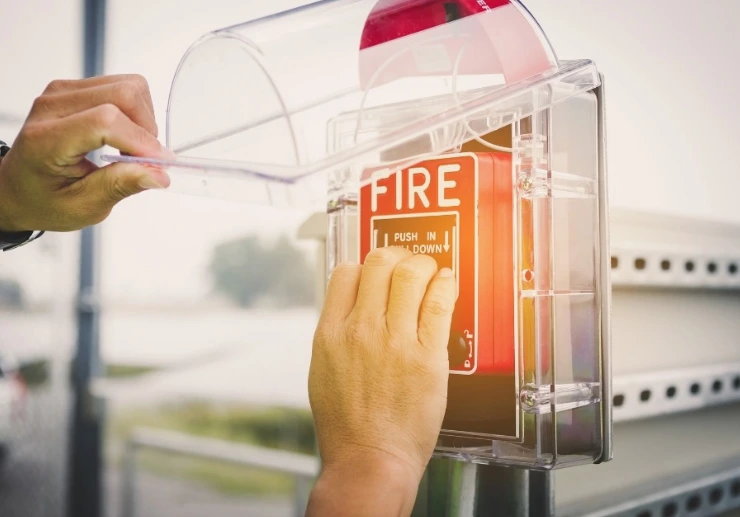
When it comes to protecting your commercial property, your employees, and your assets, a “one-size-fits-all” approach to fire safety simply does not work. A small retail boutique requires a completely different level of protection compared to a multi-story office complex or a high-hazard manufacturing facility.
Choosing the wrong commercial fire alarm system can lead to two frustrating outcomes: either your building remains under-protected and out of compliance with local fire codes, or you overspend on a massive system that your layout doesn’t actually require.
To help you make an informed decision for your business, this guide breaks down the five main types of commercial fire alarm systems, how they work, and exactly which business environments they suit best.
1. Conventional Fire Alarm Systems (Zoned Systems)
Conventional fire alarm systems are the traditional, time-tested standard for fire detection. These systems divide a building into physical sections called “zones.”
All the initiating devices (smoke detectors, heat sensors, and manual pull stations) within a specific area are wired directly back to a central fire alarm control panel on a dedicated circuit.
- How it works: If a smoke detector trips in the warehouse, the main control panel will trigger the alarm and display a message like “Alarm: Zone 3 – Warehouse.”
- The Catch: It only tells you the general zone where the fire or smoke was detected. It will not specify exactly which room or which individual detector was triggered.
- Best Suited For: Small to medium-sized businesses with simple layouts, such as small retail shops, single-story offices, strip malls, and independent restaurants.
2. Addressable Fire Alarm Systems (Intelligent Systems)
Addressable fire alarm systems are the modern, intelligent upgrade to conventional setups. Instead of monitoring a broad zone, an addressable system assigns a unique electronic address to every single device connected to the network.
- How it works: Because every smoke detector, heat sensor, and pull station has its own “identity,” the central control panel communicates with each device individually. If a fire starts, the panel will pinpoint the exact location, flashing a highly specific alert like: “Alarm: Smoke Detector 14, 3rd Floor, Conference Room B.”
- The Big Advantage: First responders and building security know exactly where to go instantly, saving critical minutes. Additionally, if a single detector develops a fault or accumulates dust, the panel tells you precisely which device needs maintenance, preventing system-wide false alarms.
- Best Suited For: Multi-story office buildings, schools, hospitals, large warehouses, hotels, and sprawling commercial complexes where pinpointing the exact location of danger is critical.
3. Wireless (Radio Frequency) Fire Alarm Systems
As the name suggests, wireless fire alarm systems eliminate the need to run miles of copper wire through walls and ceilings. Instead, they use secure, encrypted radio frequencies to transmit signals between the detectors and the main control panel.
- How it works: These systems operate on secure, multi-frequency wireless links to ensure the signal is never blocked. They are battery-powered and undergo continuous automated self-testing to ensure connectivity remains strong.
- The Big Advantage: Installation is incredibly fast, clean, and non-disruptive. There is no cutting into walls or running complex conduit networks.
- Best Suited For: Historical structures where drilling into walls is legally prohibited, high-end architectural buildings, temporary structures, and businesses that cannot afford the operational downtime of a messy, weeks-long wired installation.
4. Air Sampling Smoke Detection Systems (ASD / VESDA)
For environments where even a tiny trace of smoke can cause millions of dollars in damage or where early evacuation is absolutely non-negotiable, Air Sampling Detection (often referred to as VESDA) is the gold standard.
- How it works: Instead of waiting for smoke to passively drift up to a ceiling-mounted detector, an air sampling system actively works. It utilizes a network of small pipes spread across the ceiling to continuously draw air samples from the room back to a highly sensitive central laser detection chamber.
- The Big Advantage: It is thousands of times more sensitive than a standard smoke detector. It can identify microscopic, invisible particles released during the “pre-combustion” stage—long before a visible flame or thick smoke even develops.
- Best Suited For: Data centers, server rooms, cleanrooms, museums housing priceless artifacts, and high-ceiling facilities where standard smoke stratification prevents smoke from reaching normal detectors quickly.
5. Clean Agent Fire Suppression & Detection Systems
Standard fire alarms warn people to escape, and standard sprinklers douse the area with water. However, water can destroy servers, electronics, and delicate assets just as fast as a fire can. That is where Clean Agent systems come into play.
- How it works: These systems combine advanced addressable detection with an automated gas suppression system. When a fire is verified, the system floods the enclosed space with an eco-friendly, non-toxic gas (like FM-200 or Novec 1230).
- The Big Advantage: The gas suppresses the fire by removing heat or oxygen at a molecular level within seconds. Crucially, it leaves behind absolutely zero residue and does not conduct electricity, meaning your electronics remain completely unharmed.
- Best Suited For: IT/Telecom rooms, server closets, medical imaging suites (MRI rooms), laboratories, and record storage vaults.
Comparison at a Glance: Which System Fits Your Building?
| System Type | Core Benefit | Ideal Infrastructure |
| Conventional | Cost-effective, simple functionality | Small offices, single-unit retail shops |
| Addressable | Pinpoints exact location of danger | Multi-story buildings, large commercial facilities |
| Wireless | Zero wall damage, rapid installation | Historic buildings, temporary sites, active offices |
| Air Sampling | Ultra-early detection (pre-combustion) | Data centers, server rooms, high-value assets |
| Clean Agent | Puts out fires without using water | Tech hubs, laboratories, medical facilities |
How to Choose the Right System for Your Business
Identifying the right system comes down to evaluating three critical factors:
- Your Building Layout & Size: Small spaces do perfectly fine with conventional setups, while complex spaces require addressable or wireless solutions.
- Your Assets: If you are protecting heavy machinery or cardboard boxes, standard detection is fine. If you are protecting digital data or priceless art, you need specialized air sampling or clean agent setups.
- Local Fire Code Compliance: National fire protection standards (like NFPA regulations) and local city building codes dictate exactly what type of monitoring, notification, and response times your facility must legally maintain.
Let the Experts Guide Your Fire Safety Strategy
Designing, installing, and certifying a commercial fire alarm system requires precision engineering and deep knowledge of fire safety regulations. Making a guess can result in failed inspections, costly fines, or worse, endangering lives.
Whether you need a brand-new installation tailored to your building’s blueprint, a seamless upgrade from an outdated conventional panel, or a certified inspection to stay fully compliant, we are here to help.
Contact our certified fire safety team today for a comprehensive commercial property consultation.