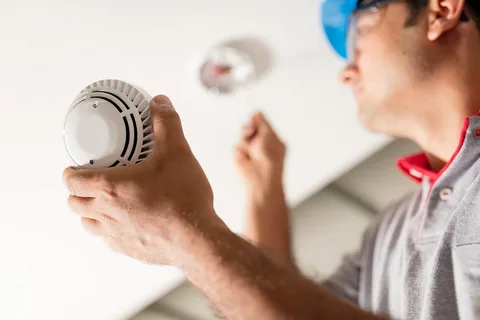
Fire safety is a critical responsibility for any commercial property owner or facility manager. Offices, warehouses, retail stores, and factories are essential to count on since there are more people there, complex layouts, and valuable items. Fire Alarm Installation plays a central role in protecting lives, minimizing property damage, and ensuring compliance with U.S. fire safety regulations. According to recent research by fire groups, the early detection mechanisms reduced injuries and business losses in case of fire. The understanding of the optimal methods of installing or modernizing a system enables commercial buildings to remain secure over an extended period.
Understand why your building needs Fire Alarm Installation?
Each business premise possesses its own fire hazards, which are determined by the use of the premise, its size, and its design. A kitchen of a restaurant is not an office or a storage room. Before beginning Fire Alarm Installation, inspect potential fire initiators, the number of individuals generally resident, and the evacuation of people. This evaluation helps determine the type of detection needed, whether smoke, heat, or a combination of both. Setting up the alarm to the risks of your building customizes it, thus detecting it faster and reducing false alarms.
Follow Local and National Fire Codes
There are tough regulations to be followed by commercial fire alarms in the United States. These regulations are statements of the location of sensors, alarm volumes, their continuity in the event of a power outage, and the supervision of alarms. A compliant Fire Alarm Installation not only protects occupants but also avoids fines, legal exposure, and insurance complications. Never forget about new rules that have to be observed as building tech and research develop.
Choose the Right Type of Fire Alarm System
There are various types of fire alarms. Regular systems divide a building into zones. Addressable systems display the specific detector that has been set off. Addressable alarms tend to work better with big or complex buildings since they provide clearer and quicker notifications. The choice of the appropriate system during Fire Alarm Installation will assist fire crews to operate more quickly and stay on the simpler maintenance side.
Plan Detector Placement Carefully
The position of the detectors is significant. Smoke detectors should be positioned where smoke is likely to travel, while heat detectors are ideal for areas like kitchens or mechanical rooms. During Fire Alarm Installation, professionals consider ceiling height, airflow, and obstructions that could delay detection. Research indicates that when detectors are poorly placed, alarms can take a long time to get triggered, and individuals can be injured or property could be destroyed.
Integrate With Other Building Safety Systems
Contemporary structures possess numerous safety systems, which must communicate with one another. Sprinklers, emergency lights, door locks, and heating vents can be connected to fire alarms. The system would then be responsive when connected to another, such as opening exit doors or halting the spread of smoke. An excellent Fire Alarm Installation will ensure that all the safety equipment communicates with one another during an emergency.
Prioritize Professional Installation and Testing
Once installed, the system performs extensive testing measures to ensure all lights, alarms, and monitoring connections are operational. Professional Fire Alarm Installation reduces the risk of the failure of the system and enables the building to meet the deadline when passing the inspections.
Train Staff and Occupants on System Use
The best system does not assist any longer when people are not aware of what to do. Commercial buildings are supposed to educate the whole community about the sound of alarms, the way to exit, and instructions on how to use pull stations. When you plan the Fire Alarm Installation, you should include staff training so that the response and inquiries during a fire are faster and less confusing. Good behavior is reinforced using easy signs and regular drills and promotes a safety culture.
Bringing It All Together
Fire safety in commercial buildings requires more than basic alarms. It requires detailed planning, adherence to regulations, and professional labour. Knowing the dangers of the building due to regular maintenance, every action will contribute to the safety of the place. A properly installed and maintained Fire Alarm Installation saves lives, property, and ensures that the business continues. Through such tips, the owners of the property can be assured that their investment is good as it provides a secure cover and calm.
FAQs
Why is Fire Alarm Installation important for commercial buildings
It provides early detection, supports safe evacuation, and helps meet legal and insurance requirements.
How often should commercial fire alarm systems be tested?
Most systems require annual inspections, with some components tested more frequently depending on local codes.
What type of system is best for large commercial properties
Addressable systems are often preferred because they identify the exact location of an alarm trigger.
Can Fire Alarm Installation be integrated with other safety systems
Yes, modern systems can connect with sprinklers, emergency lighting, and building management systems.
Who should perform Fire Alarm Installation in a commercial building
Licensed and experienced professionals should handle installation to ensure compliance, reliability, and proper testing.